Hempcrete vs Brick Veneer Insulation Performance in Australia
Hempcrete vs brick veneer insulation in Australia — a straight head-to-head on thermal performance, energy bills, moisture control, and long-term durability.
Hempcrete vs Brick Veneer Insulation Performance in Australia
Hempcrete outperforms brick veneer on thermal mass, moisture regulation, and long-term energy efficiency in Australian climates. Brick veneer is cheaper upfront and easier to source — but it doesn't regulate temperature or moisture passively, and that gap shows up on your energy bills year after year.
Here's the honest comparison.
Table of Contents
Thermal Performance
Energy Bills
Moisture Regulation
Long-Term Durability
Head-to-Head Summary
FAQs
1. Thermal Performance
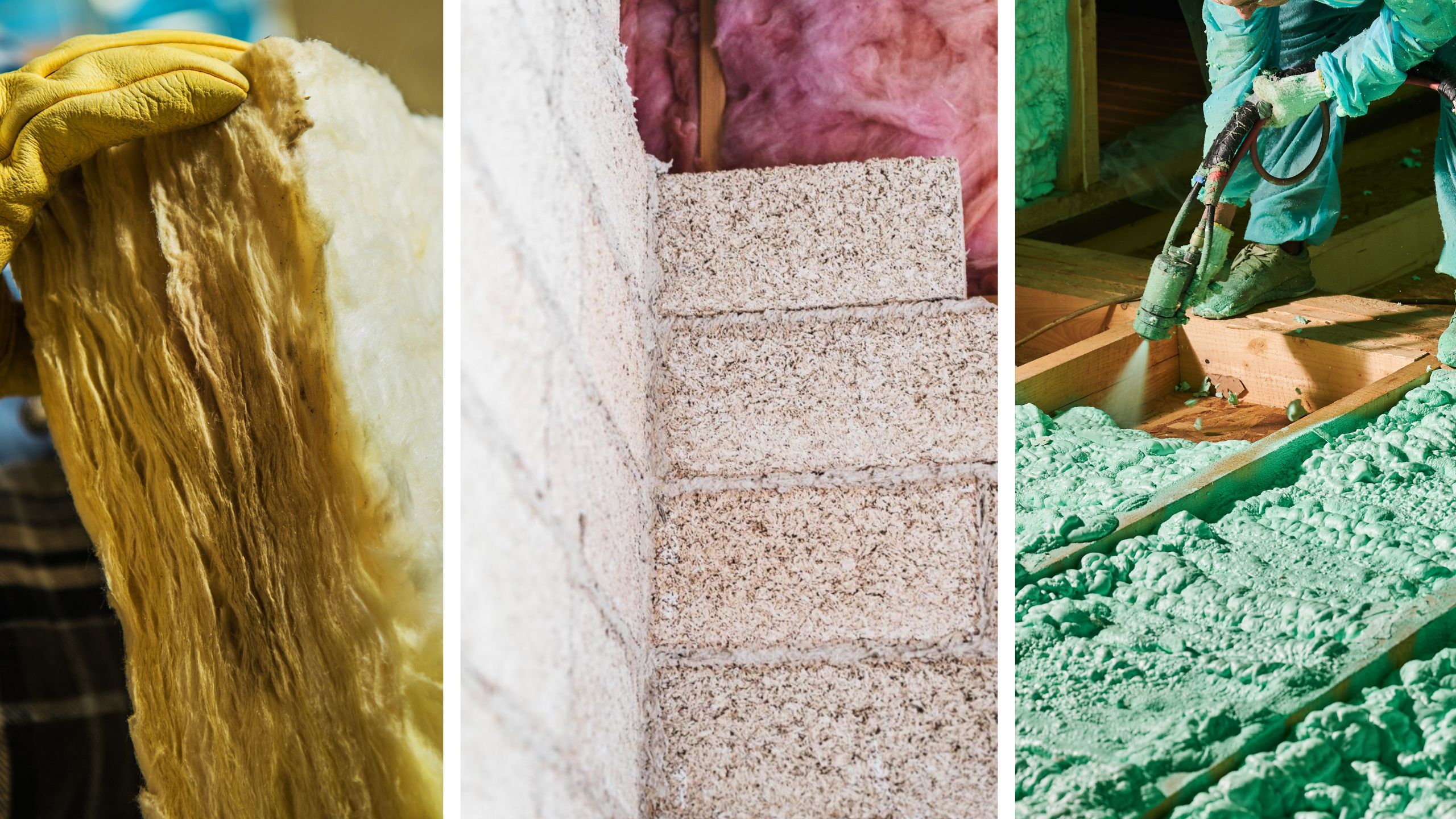
Brick veneer is widely misunderstood. Most Australians assume brick = good insulation. It doesn't. A standard brick veneer wall — brick skin, cavity, and plasterboard — has an R-value of around R1.0 to R1.4 without added insulation batts.
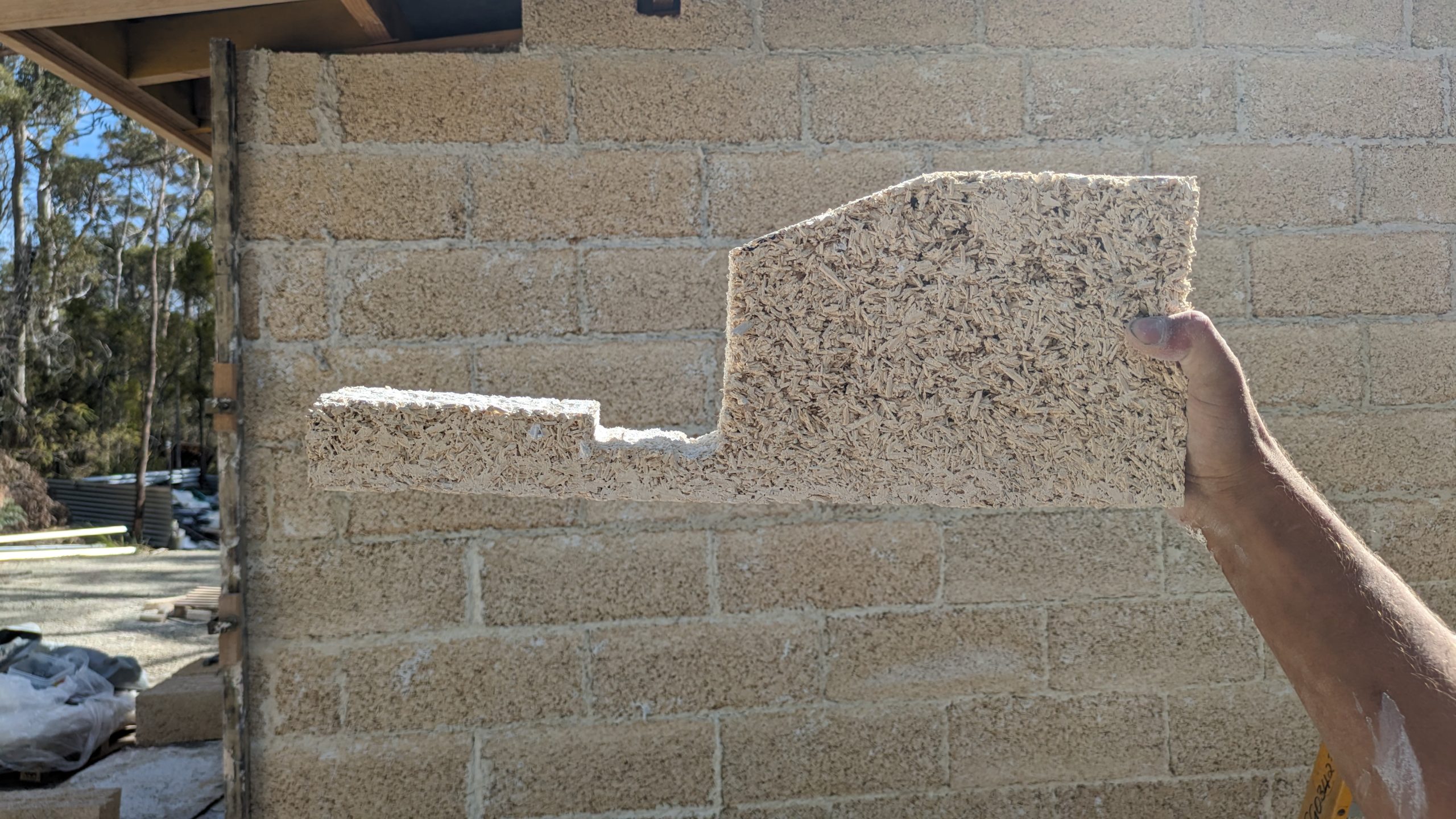
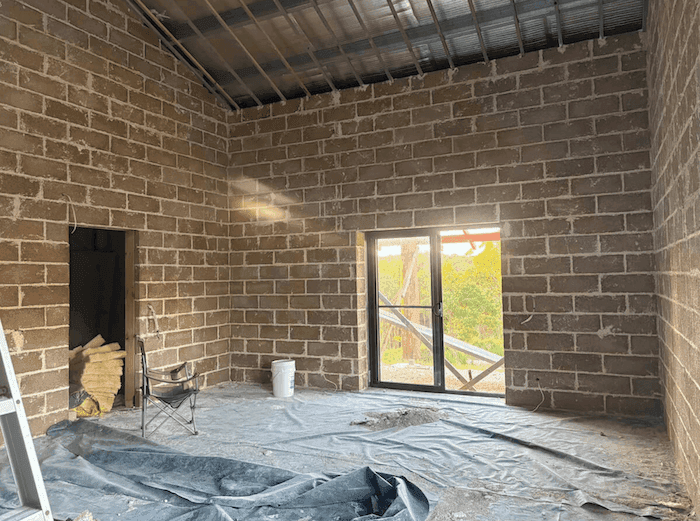
RespiraBlock hempcrete blocks tell a different story. The RP20 (200mm block) delivers R-4.34, and the RP30 (300mm block) reaches R-6.42 — in a single-material wall with no batts, no cavity, no thermal bridging from cement mortar.
And that R-value number still doesn't tell the full story.
The real advantage of hempcrete is thermal mass combined with insulation. Hempcrete absorbs heat slowly during the day and releases it gradually overnight, smoothing out temperature swings. Brick veneer has thermal mass in the brick skin, but the air cavity separates it from the interior — so that mass doesn't do much for your internal comfort.
In a Queensland summer or a Melbourne winter, that difference is real. Hempcrete homes stay closer to a stable internal temperature without mechanical assistance. Brick veneer homes typically rely on air conditioning and heating to compensate.
The mortar matters too — and this is where it gets interesting.
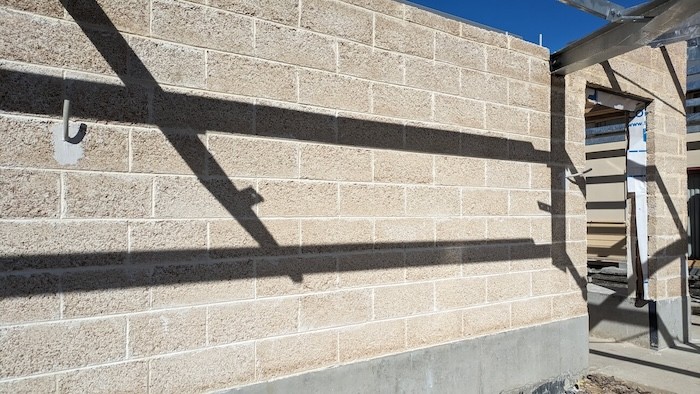
Standard brick mortar makes up around 15.3% of a brick wall's face area (based on standard 230mm x 76mm bricks with 10mm joints). That mortar contains cement, which is highly conductive — it creates a continuous thermal bridge running through the entire wall.
RespiraBlock uses a mortar composed entirely of hemp and lime — no cement. With 500mm x 200mm blocks on a 13mm joint, the mortar accounts for just 8.5% of the wall face area. And because it contains hemp hurd, it adds insulative value rather than undermining it. You end up with a wall where even the joints are working for you thermally, not against you.
2. Energy Bills: What Does the Difference Actually Cost You?
Heating and cooling accounts for around 40% of the average Australian household energy bill — roughly $880 per year on a $2,200 annual bill.
A hempcrete home's passive temperature regulation reduces peak HVAC loads significantly. Based on the thermal performance advantage over a standard brick veneer home of the same size, the realistic reduction in heating and cooling energy use sits between 30–50%.
Here's what that translates to in real money:
Saving Scenario | Per Month | Per Year | Over 20 Years* |
|---|---|---|---|
Conservative (30% HVAC reduction) | $22 | $264 | ~$7,860 |
Middle estimate (40% reduction) | $29 | $352 | ~$10,480 |
Strong performer (50% reduction) | $37 | $440 | ~$13,100 |
20-year figures assume 4% annual energy price increases — consistent with Australian energy trends.
The upfront cost difference between hempcrete and brick veneer is real. But so is this number. Energy prices are not going down. A wall system that works passively keeps paying you back every single month for the life of the building.
Hempcrete homes regularly achieve 7-star NatHERS ratings or higher without relying on mechanical systems — something a standard brick veneer home typically needs careful passive design intervention to reach.
3. Moisture Regulation: Hempcrete Has No Competition Here
This is where hempcrete separates itself most clearly.
Brick veneer walls can accumulate moisture — particularly in climates with significant humidity swings (north Queensland, coastal NSW, much of Victoria in winter). The air cavity is designed to handle this, but condensation within wall cavities remains a real issue in poorly detailed builds. Mould growth inside wall cavities is common and often invisible until significant damage has occurred.
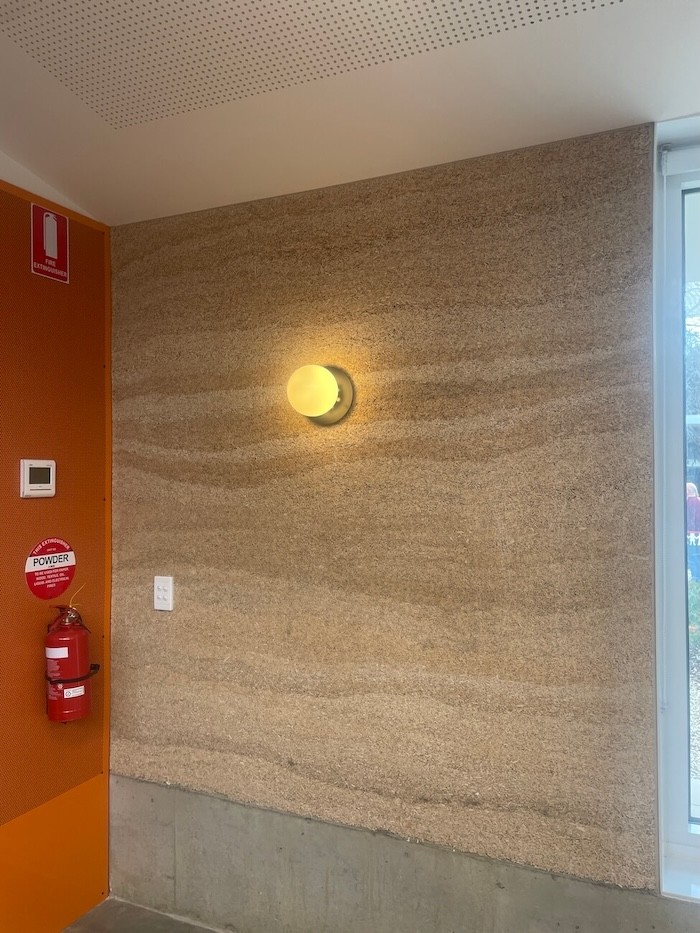
Hempcrete is hygroscopic, meaning it actively absorbs and releases moisture vapour in response to humidity changes. It buffers internal humidity naturally, reducing condensation risk and maintaining healthier indoor air quality. The lime binder in hempcrete is also naturally antimicrobial — mould growth within a hempcrete wall is essentially unheard of.
In a practical sense: hempcrete breathes, brick veneer doesn't. For Australian climates that cycle through humid summers and dry winters — or coastal environments with persistent humidity — this is a significant performance advantage.
4. Long-Term Durability: Hempcrete Gets Better With Age
Brick veneer is a proven performer. Well-built brick veneer homes from the 1970s are still standing and functioning well. The brick skin itself is extremely durable — largely maintenance-free and resistant to impact, UV, and fire.
Hempcrete has a shorter track record in Australia but centuries of precedent in Europe. Hempcrete structures in France have been dated to over 1,500 years old. Modern hempcrete builds from the 1980s and 1990s in France and the UK are performing well with no signs of structural degradation.
Crucially, hempcrete mineralises over time. As the lime binder continues to carbonate, the wall slowly becomes harder and denser — it actually improves with age, rather than degrading. This is the opposite of rigid cement based materials, which are moe pron to cracking under movement over time.
Fire resistance is another durability point worth noting. RespiraBlocks holds a BAL-FZ rating and is non-combustible. The hemp hurd within the mix does not support flame spread, and the lime binder is inherently fire-resistant. Brick veneer is also non-combustible at the brick skin.
Head-to-Head Summary
Factor | Hempcrete (RespiraBlock) | Brick Veneer |
|---|---|---|
R-value | R-4.34 (200mm) / R-6.42 (300mm) | R-1.0–R-1.4 (uninsulated cavity) |
Thermal mass effectiveness | High — mass and insulation combined | Moderate — mass separated from interior |
Passive temperature regulation | Strong | Requires good design to achieve |
Mortar thermal bridging | 8.5% wall area, hemp-lime (no cement) | 15.3% wall area, cement-based |
Energy savings vs brick veneer | $22–$37/month / $264–$440/year | Baseline |
Moisture regulation | Hygroscopic — actively buffers humidity | Passive cavity, condensation risk |
Mould resistance | Very high (lime binder antimicrobial) | Moderate — cavity issues common when cement based mortar used. |
Fire resistance | BAL-FZ. non-combustible throughout | Non-combustible skin, combustible frame |
Long-term durability | Improves with age (mineralisation) | Proven performer, stable over time |
Tradesperson availability | Standard bricklayer | Standard bricklayer |
Frequently Asked Questions
Is hempcrete better than brick veneer for Australian homes? For thermal performance, moisture regulation, and long-term energy efficiency — yes. For upfront cost and ease of finding a builder — brick veneer still has the advantage. The right choice depends on your priorities.
Can hempcrete handle Australian humidity? Yes — better than most wall systems. Its hygroscopic nature means it regulates humidity passively, reducing condensation and indoor air quality issues common in humid climates.
How long does hempcrete last compared to brick veneer? Hempcrete mineralises and hardens over time — European examples exceed 1,500 years. Modern hempcrete builds from the 1980s in Europe are performing well. Brick veneer is also highly durable, with well-built examples lasting 50–100+ years.
Is hempcrete fireproof? It's non-combustible, not fireproof. RespiraBlock holds a BAL-29 fire rating and does not support flame spread, offering whole-wall fire resistance. Brick veneer's timber frame behind the brick skin is combustible, which requires additional detailing in bushfire zones.
The Bottom Line
Brick veneer built Australia's suburbs. It's proven, available, and affordable. But it wasn't designed with passive thermal performance in mind — it relies on added insulation, good orientation, and mechanical systems to compensate.
Hempcrete is a wall system that does more by default. It insulates at R-4.34 or R-6.42, regulates moisture, resists fire to BAL-29, and uses a mortar with no cement that adds insulation rather than conducting heat. It gets stronger over time. And it saves you $22–$37 every month on energy — for the life of the building.
The trade-off is higher upfront cost and fewer builders who know how to use it. That gap is closing. But the performance advantage is already there.
Published by William Brain — RespirabuiltFor questions about hempcrete construction in Australia, contact our team or use our Hemp Block Cost Calculator.