Castlemaine Retrofit
Upgrading an existing homes external wall envelope. Castlemaine, Victoria
Castlemaine Retrofit
Upgrading an existing exterior walls without moving out!
Castlemaine, Victoria
Supplied by: Respirabuilt
Design Partner: N/A
Builder: Local carpenter & bricklayer
Much of Australia’s existing housing stock was built long before thermal performance, vapour control, or long-term comfort were significant parts of the brief. In regional areas like Castlemaine, this often shows up as lightweight, vapour-closed homes that struggle to cope with hot summers, cold winters, and everything in between.
Many of the affordable homes of the era were also clad externally in asbestos sheeting, as was the case here.
This project began with a house facing a familiar set of problems, ones that had become too uncomfortable to ignore. The home was an ageing asbestos-clad structure, typical of its era and predictably underperforming. While the asbestos was professionally removed as a first step, the broader challenge remained. The building envelope offered little insulation, trapped moisture, and delivered little to no internal comfort.
The client’s goal was not a full rebuild or internal renovation. Instead, they wanted to understand whether it was possible to significantly improve performance using the structure they already had, without disrupting the internal living environment or having to move out during construction.
The Challenge
Retrofitting an existing home almost always involves compromise. Improving wall performance usually means opening up internal linings, relocating services, temporarily displacing furniture, and interrupting daily life. For many homeowners, that level of disruption becomes the main reason upgrades never happen.
In this case, the brief asked for introducing a high-performance wall system to an underperforming, vapour-closed house, while leaving the interior untouched. The solution needed to work with the existing timber frame, remain affordable, and be achievable using conventional construction methods.
How Things Were Handled
Rather than working inward, the decision was made to work outward.
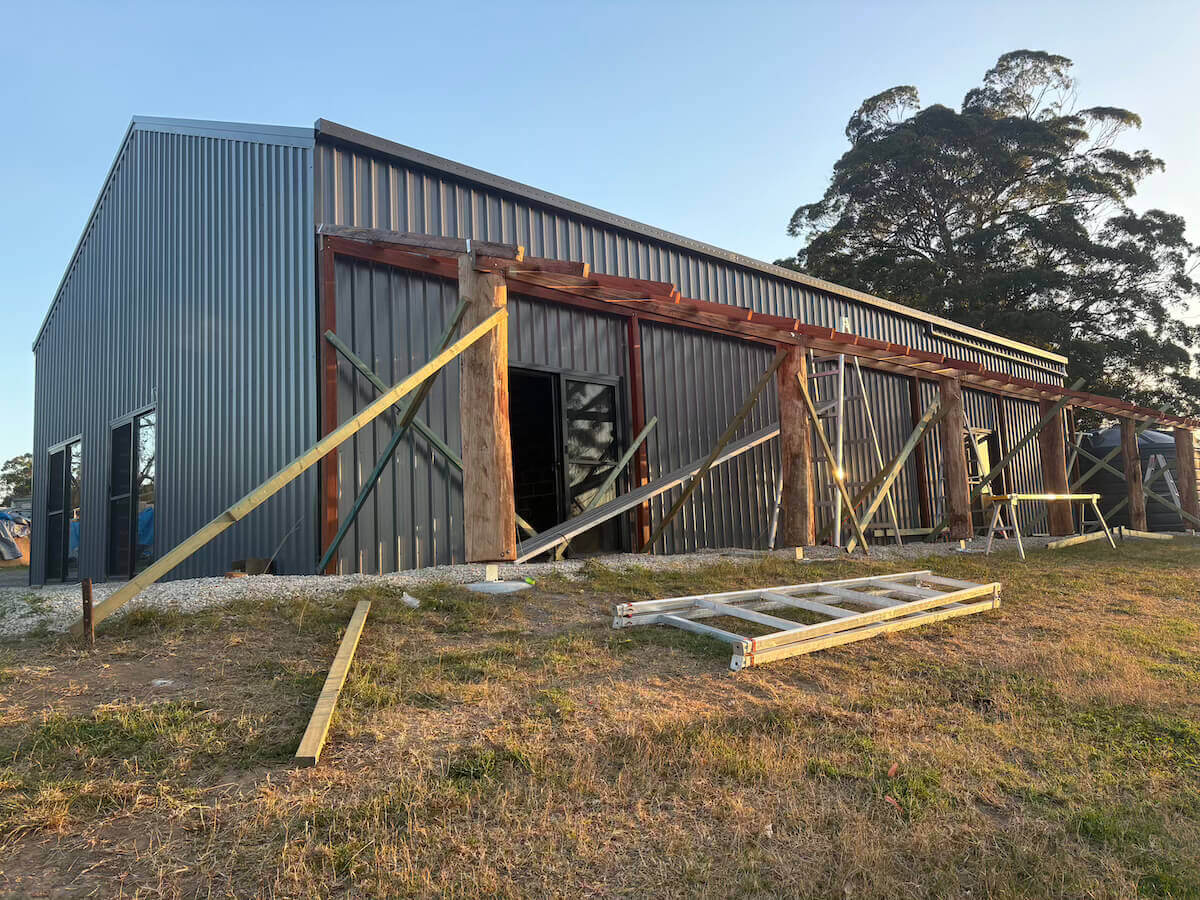
Once the asbestos was removed, the existing timber frame was exposed on the outside of the house. This opened up a simple but effective opportunity to upgrade the building envelope without disturbing internal finishes.
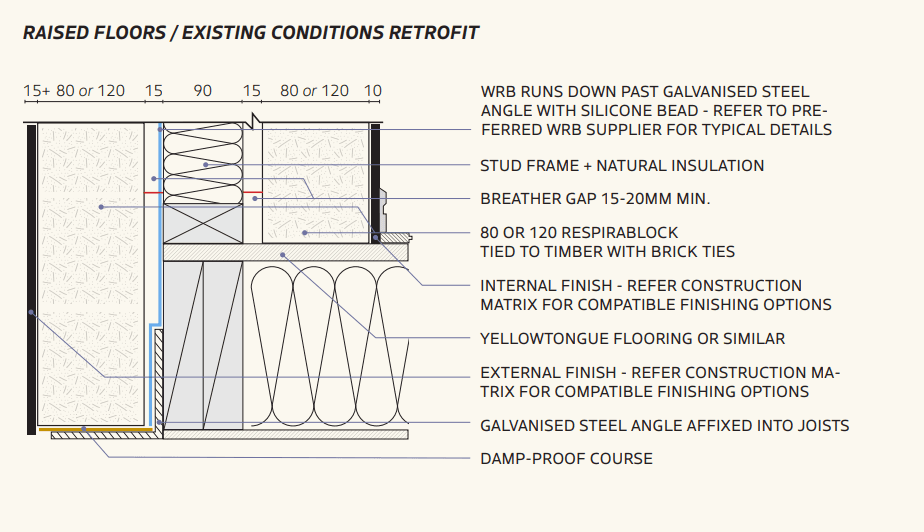
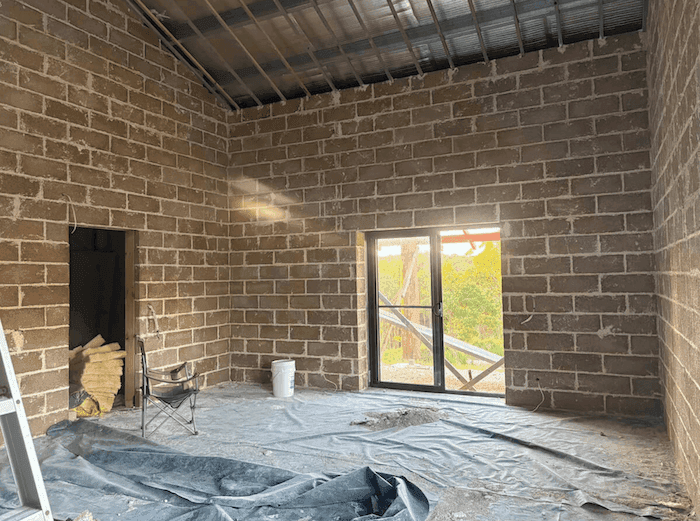
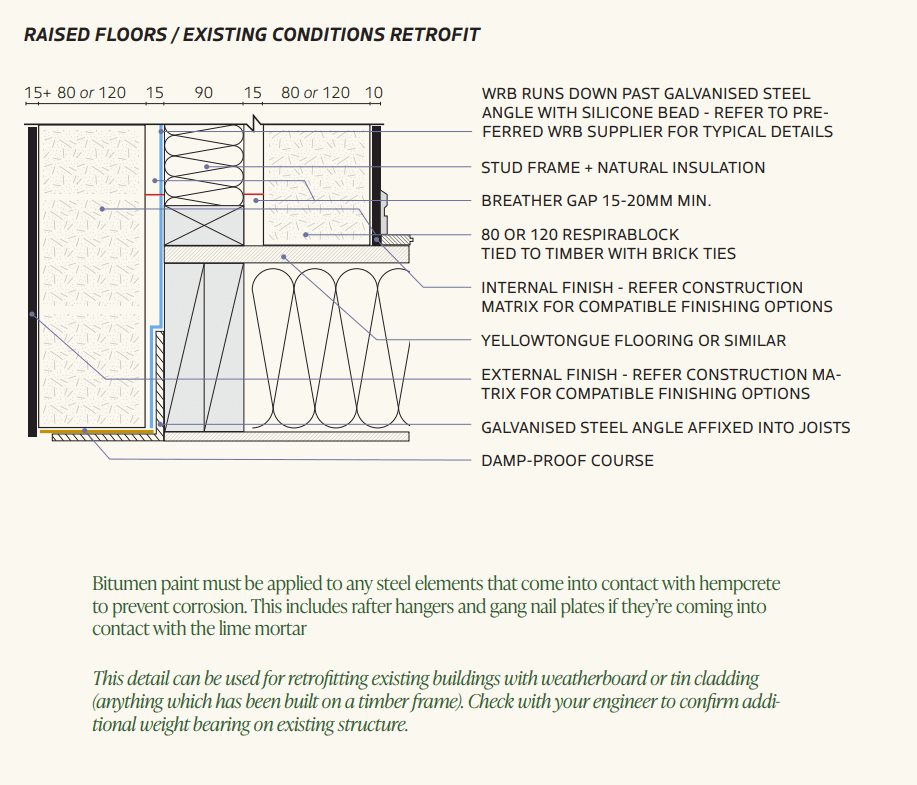
Zooming in on this case was even more interesting. A modern vapour-open wall wrap was installed behind the new wall, and a standard steel brick lintel was introduced at the base to provide a clear and reliable load point. RespiraBlocks were then laid directly onto the lintel and tied back to the timber frame, forming a continuous, breathable external wall layer.
The block system itself played a key role in keeping the process straightforward. The blocks arrive pre-formed and consistent, and can be easily cut and shaped on site, allowing them to fit around existing openings. This meant the installation followed a clear, logical sequence rather than requiring complex problem-solving or specialised tools. For those wanting a deeper breakdown of how the system is installed, we’ve outlined the process in more detail here
The home’s eaves, extending approximately 350 millimetres beyond the wall frame, comfortably accommodated the additional wall thickness, avoiding the need for roof modifications or further structural changes.
Throughout the process, the internal walls, plasterboard, and furniture remained exactly as they were. The homeowner continued living in the house while the building envelope was upgraded around them.
By using a block-based system, Hempcrete became a viable retrofit solution. Cast-in-place hempcrete would have required removing internal linings and using a much greater volume of material, dramatically increasing disruption.
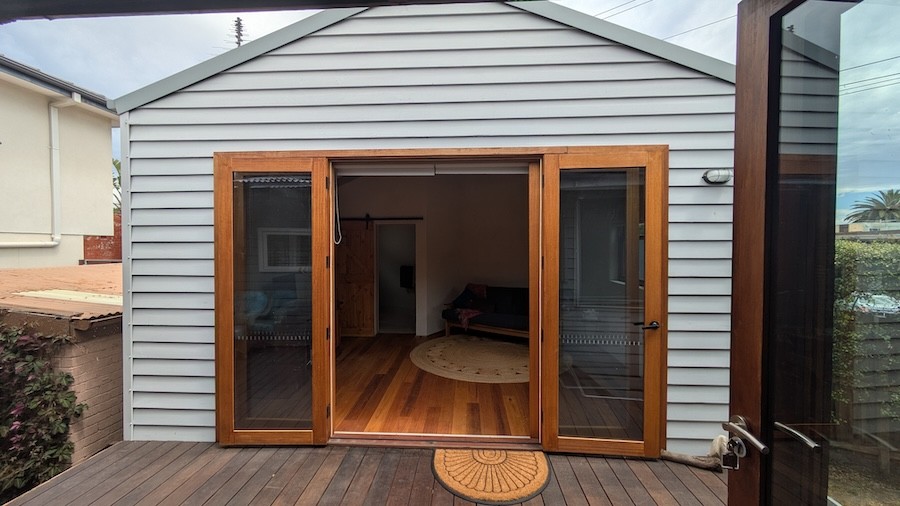
Beyond performance, the external upgrade completely changed the way the house presents. What was once an asbestos-clad shell is now a solid, textured home that sits comfortably within its local environment. The improved street appeal is likely to have boosted the home's resale value alongside its thermal performance.
Delivery and Collaboration
This project was delivered by a local carpenter and bricklayer, without a designer or architectural team. Respirabuilt worked closely with the carpenter throughout the process, providing guidance on detailing and sequencing to ensure the system was installed correctly and efficiently.
Once it came time to lay the blocks, upfront guidance and clear sequencing allowed the blockwork to be completed efficiently over just a few days.
The outcome highlights an important point. High-performance building systems do not need to be difficult to install to be effective. By designing Hemp Blocks that integrate cleanly with standard construction methods, the upgrade remained accessible, builder-friendly, and easy to execute on a real site.
This approach allowed the retrofit to stay grounded in practical realities, while still delivering meaningful performance gains.
Cost and Efficiency
This project demonstrates how an external envelope upgrade can deliver real performance improvements without the timeframes or costs typically associated with deep retrofits.
Project Snapshot:
External wall area upgraded: ~55m²
Hempcrete blocks laid in: 3 days
Brick Lintel: a standard, off-the-shelf steel brick lintel
Internal finishes stayed unchanged, and occupants remained living in the home throughout
By using a block-based system, hempcrete is actually a possibility for this job. Cast-in-place hempcrete would have been a dramatic procedure with steps not limited to, but including the removal of the interior linings, and also a much larger volume of hempcrete would have been needed to be used.
Clear Wins
The completed retrofit has dramatically improved the home’s thermal performance, transforming a previously inefficient, poorly insulated structure into one of the best-performing houses in the area.
Internal temperatures are now far more stable, moisture is managed effectively, and overall comfort has improved without increasing reliance on mechanical systems. Importantly, these gains were achieved without internal disruption, extended downtime, or the costs typically associated with deep retrofits.
This Castlemaine project demonstrates a practical and affordable pathway for upgrading existing Australian homes, showcasing how far performance can be pushed without overbuilding the solution.
A Smart Approach
This project shows how much can be achieved by working deliberately with what’s already there. Rather than defaulting to a rebuild or invasive internal works, the focus is on the building envelope and on making decisions that specifically fit the needs of this project.
For older homes, upgrades stall not because the problems are unsolvable, but because the perceived disruption outweighs the benefit. This retrofit demonstrates another path. One that improves performance meaningfully, by working with the structure already in place, and improving it deliberately rather than extensively, the retrofit shows how existing homes can be lifted into a far higher performance bracket through targeted, well-considered interventions.
The approach of keeping the intervention targeted and buildable, the outcome stayed grounded in real-world constraints. The house now performs better, feels more comfortable, and looks more resolved, all without asking occupants to put their lives on hold.
For homeowners, builders, and designers dealing with ageing housing stock, this approach reframes what a retrofit can realistically be.
Curious how a similar approach could work on your project? Get in touch to talk through options, details, and what’s possible for your build.